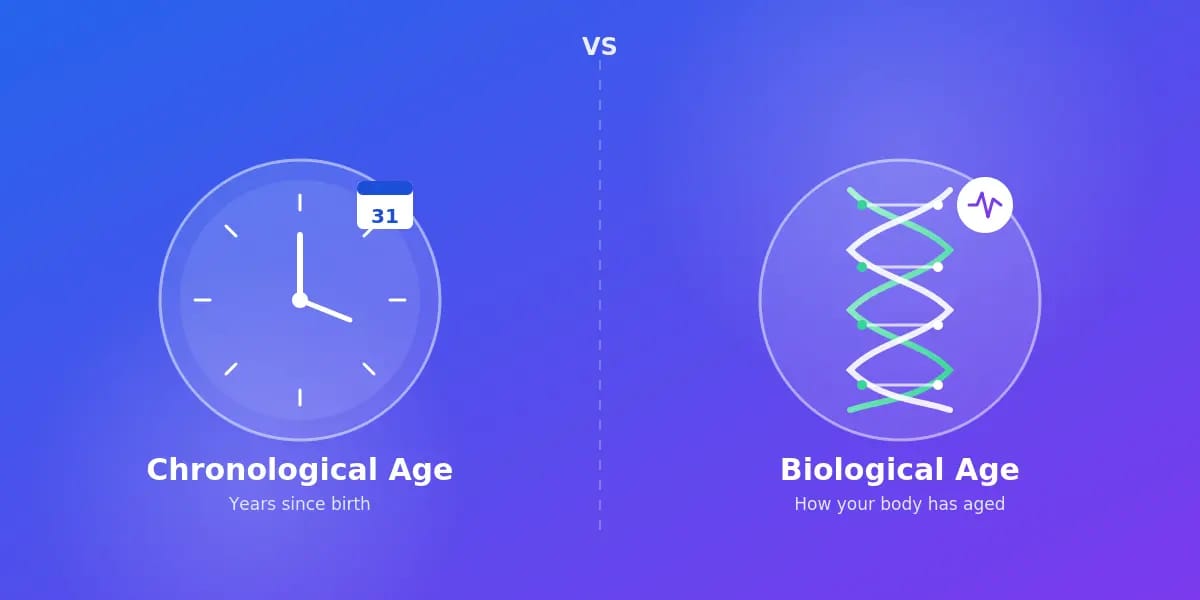
Most people know their age in years, but very few stop to ask whether that number actually reflects how well their body has aged. Two people can share the exact same birth date and still age very differently on the inside.
This is the difference between chronological age and biological age. Chronological age is fixed and based purely on the calendar, while biological age reflects the real condition of your cells, organs and body systems.
In this guide, we explain how both are measured, how biological age is calculated, why the difference matters, and simple ways to help lower your biological age naturally.
Table of Contents
Calculate Your Exact Chronological Age
What Is Chronological Age?
Chronological age is the amount of time that has passed since your date of birth, measured in years, months and days.
It is fixed, identical for anyone born on the same date, and increases by exactly one year on every birthday. It is the age used on official documents, ID cards and legal forms.
What Is Biological Age?
Biological age, sometimes called physiological age, is an estimate of how old your body actually appears to be, based on measurable health markers rather than the calendar.
Two people born on the exact same day can have very different biological ages depending on genetics, diet, sleep, stress and overall lifestyle.
Two friends are both 40 years old (chronological age). One smokes and rarely exercises; their biological age may test out around 48. The other eats well and exercises regularly; their biological age may be closer to 33.
Chronological vs Biological Age
Chronological age and biological age differ in several key ways:
- Definition: Chronological age is time since birth. Biological age is the physical condition of the body.
- Changes with lifestyle: Chronological age is fixed. Biological age can rise or fall.
- How it's measured: Chronological age uses the calendar. Biological age uses blood tests, DNA and fitness markers.
- Main use: Chronological age is used for legal records. Biological age is used for health and longevity insight.
How Is Biological Age Calculated?
Unlike chronological age, there is no single fixed formula for biological age. Scientists instead combine several biomarkers into an overall estimate.
1. Epigenetic Clocks (DNA Methylation)
Considered the gold standard. Chemical tags on your DNA, called methylation patterns, change in predictable ways as cells age. A blood or saliva sample can be used to estimate biological age from these patterns.
2. Telomere Length
Telomeres are protective caps at the ends of chromosomes, similar to the plastic tips on shoelaces. They shorten with each cell division, and shorter-than-average telomeres can suggest faster biological aging.
3. Blood-Based Biomarkers
Common markers include cholesterol, blood glucose, blood pressure, inflammation levels, and kidney and liver function.
4. Physical Performance Tests
Simpler indicators such as resting heart rate, grip strength, flexibility and recovery time after exercise are also used as accessible proxies for biological aging.
Why Biological Age Matters
Research suggests biological age can be a stronger predictor of disease risk and life expectancy than chronological age alone. Two people of the same chronological age can have very different risks of conditions like heart disease or diabetes.
This is why biological age has become popular in longevity research. It reframes aging as something partly within your control, rather than something purely inevitable.
How to Lower Your Biological Age
While chronological age cannot be changed, research suggests biological age can be slowed, and in some cases improved, through consistent habits:
- Sleep 7–9 hours nightly — poor sleep is linked to faster cellular aging.
- Exercise regularly — cardio and strength training support long-term heart and cell health.
- Eat a nutrient-dense diet — vegetables, fiber and healthy fats help reduce inflammation.
- Manage stress — chronic stress raises cortisol, which is linked to faster aging markers.
- Avoid smoking and limit alcohol — both are linked to older biological age readings.
- Stay socially connected — studies link loneliness to accelerated aging markers.
Age Comparison Example
Consider identical twins born on the same date, so their chronological age is exactly the same. If one twin exercises regularly, sleeps well and eats a balanced diet, while the other smokes and leads a sedentary lifestyle, biomarker testing can show a measurable gap between their biological ages, even though their genetics and birth date are identical.
Frequently Asked Questions
What is the difference between biological age and chronological age?
Chronological age is the number of years since your birth date. Biological age is an estimate of how old your body actually appears to be, based on health markers rather than the calendar.
How is biological age calculated?
It is estimated using biomarkers such as DNA methylation, telomere length, blood pressure, cholesterol, blood glucose, and physical fitness tests.
Can biological age be lower than chronological age?
Yes. People with healthy lifestyle habits can have a biological age that tests several years younger than their chronological age.
Can I lower my biological age?
Yes, to a meaningful extent. Regular exercise, quality sleep, stress management and a nutrient-rich diet can help slow or lower biological age over time.
Is chronological age still used for legal purposes?
Yes. Chronological age remains the only legally recognized measure of age for documents, employment, marriage and other official purposes.
Is biological age testing accurate?
Epigenetic clock tests are considered fairly reliable for research purposes, though accuracy can vary between commercial kits, so results are best used as a general trend indicator.
Know Your Exact Age in Seconds
Use our free, accurate Age Calculator to find your precise age right now.
Calculate My Age →